STDDAI-nativeOK PointAudit Trail
I don't trust any AI agent
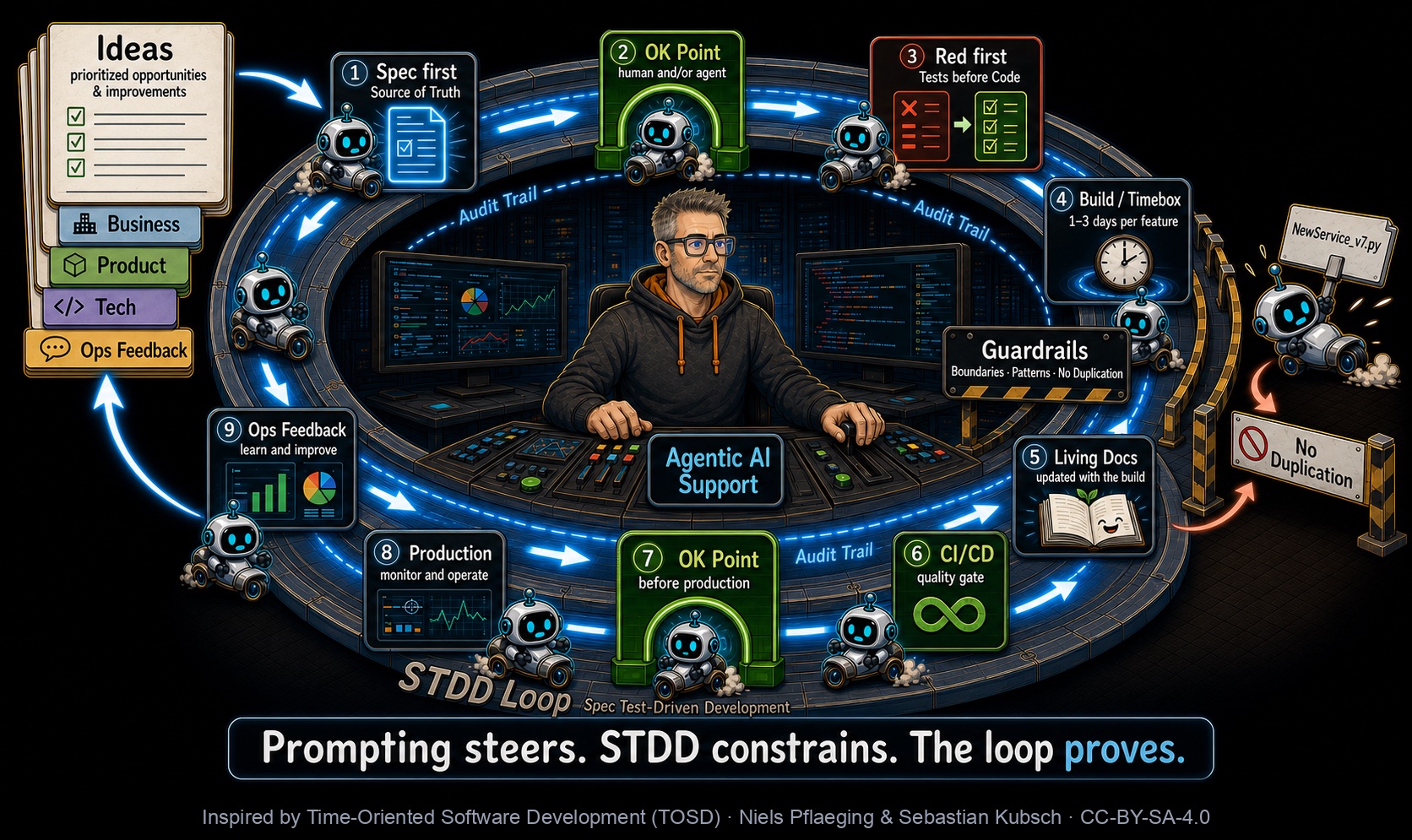
I don't trust any AI agent. And yet one just built an entire feature set, almost without my hands on the keyboard. Not because I trust it, but because every step leaves an audit trail.
Thoughts on AI-native Software Engineering, productivity, and building great products.
I don't trust any AI agent. And yet one just built an entire feature set, almost without my hands on the keyboard. Not because I trust it, but because every step leaves an audit trail.
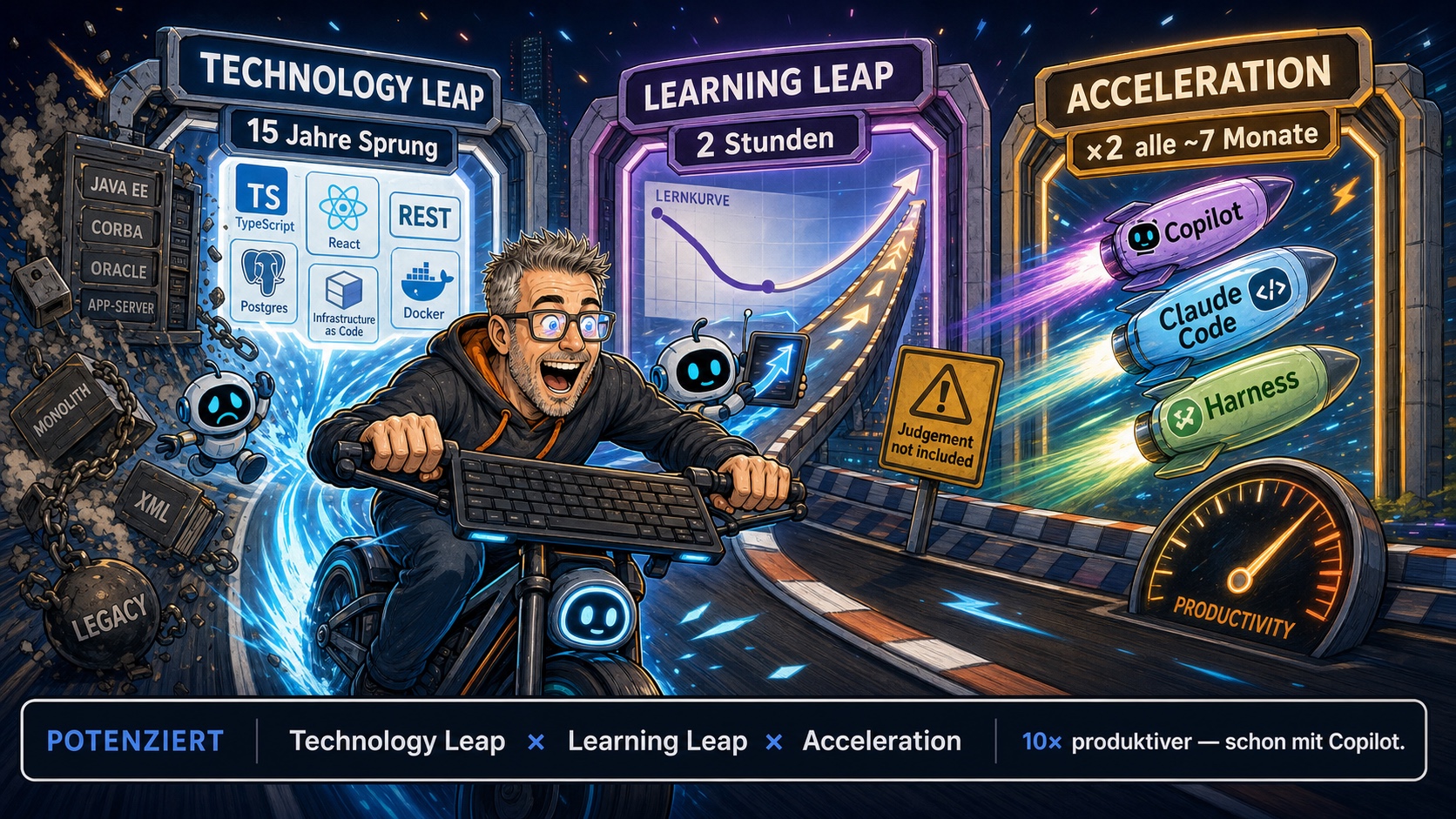
For fifteen years I didn't build software myself. When I came back, a job that used to need a whole ops team was down to one click. Being 20X more productive isn't magic, it's a multiplication of three forces: Technology Leap, Learning Leap, Acceleration.
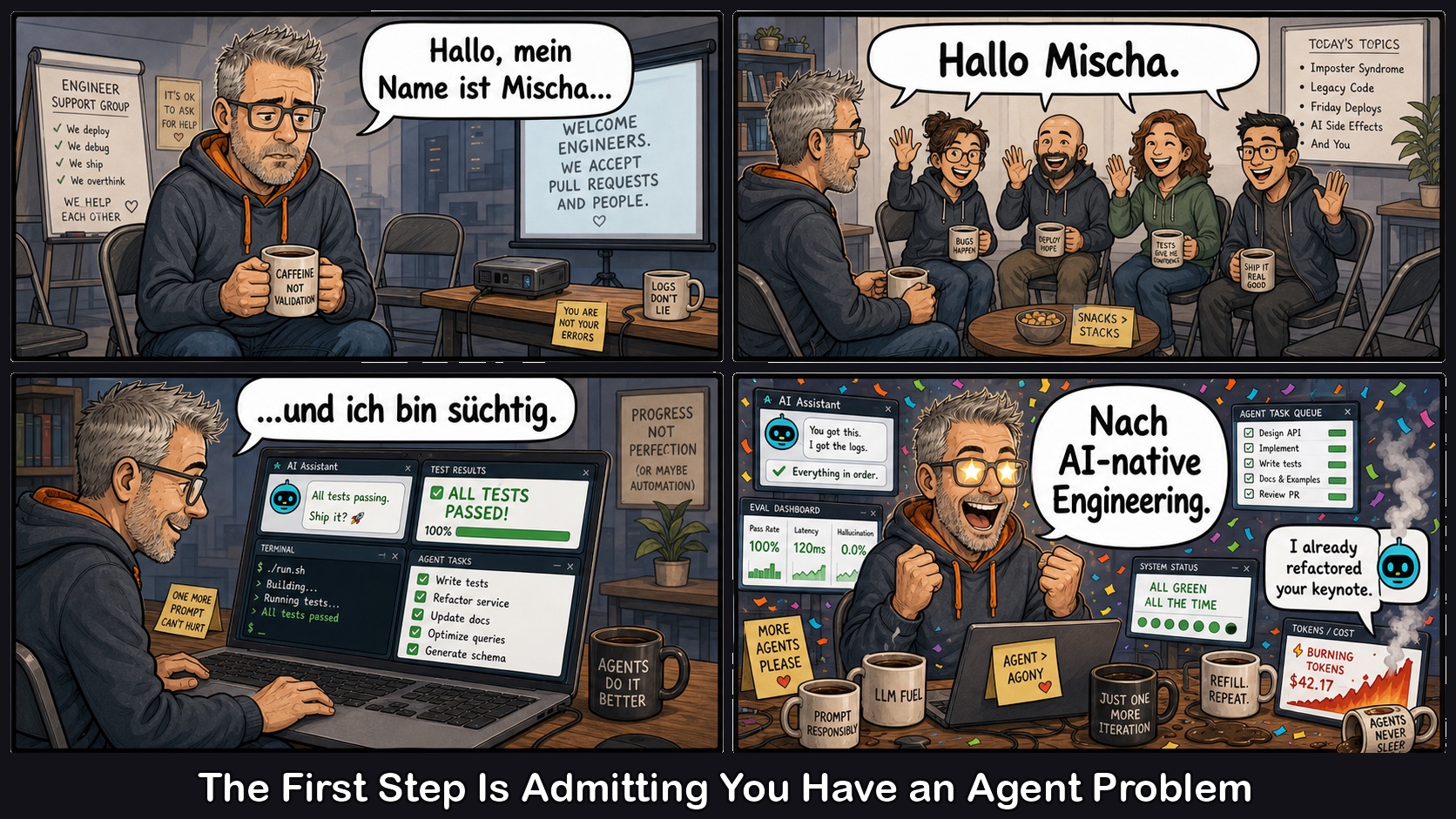
Hi, my name is Mischa. And I'm addicted to AI-native software engineering. How to live with that addiction, where it gets dangerous, and how responsibility takes the place of the rush.
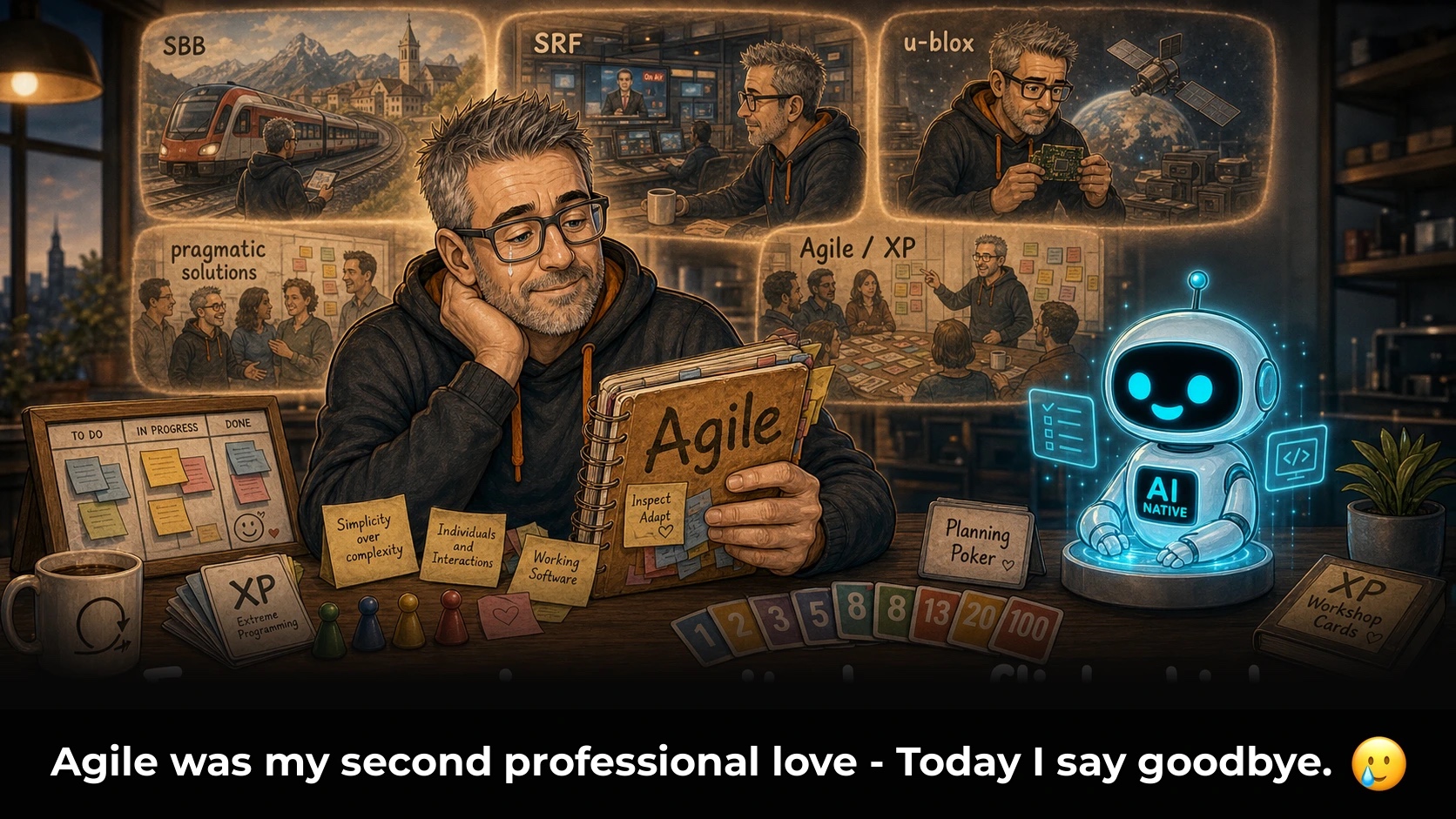
Agile was my second professional love. Today I say goodbye. For over ten years I lived, taught, and scaled Agile. A year ago, when I typed my first prompt, it hit me pretty quickly why Agile no longer fits AI-native.
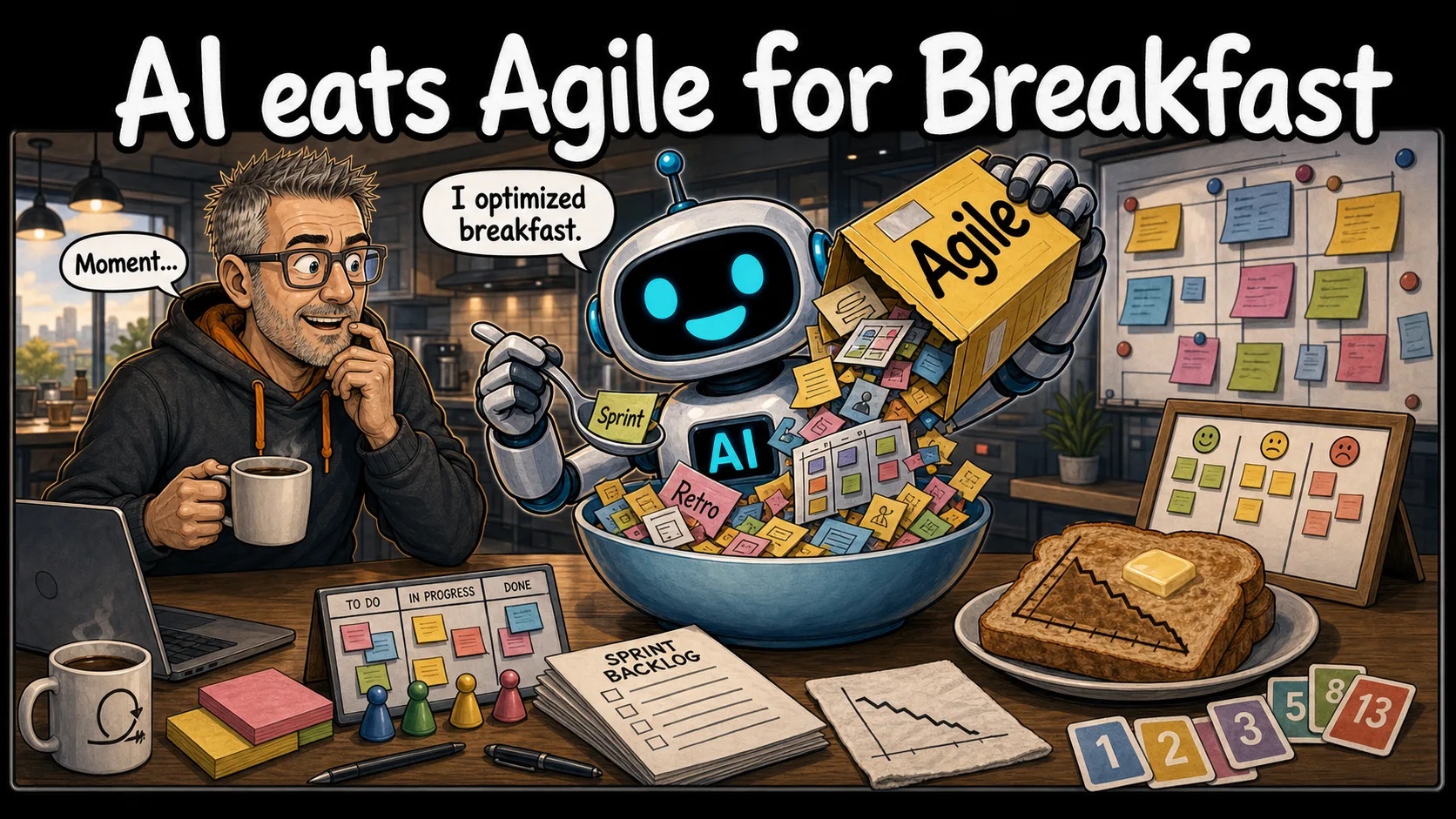
A decade after stepping back from the Lean Agile Scrum (LAS) community, I wanted to speak up again with a bold thesis: AI eats Agile for Breakfast. The conference was cancelled. Three weeks later I'm giving the opening keynote somewhere else – plus a workshop. Even the cancellation proved the thesis.
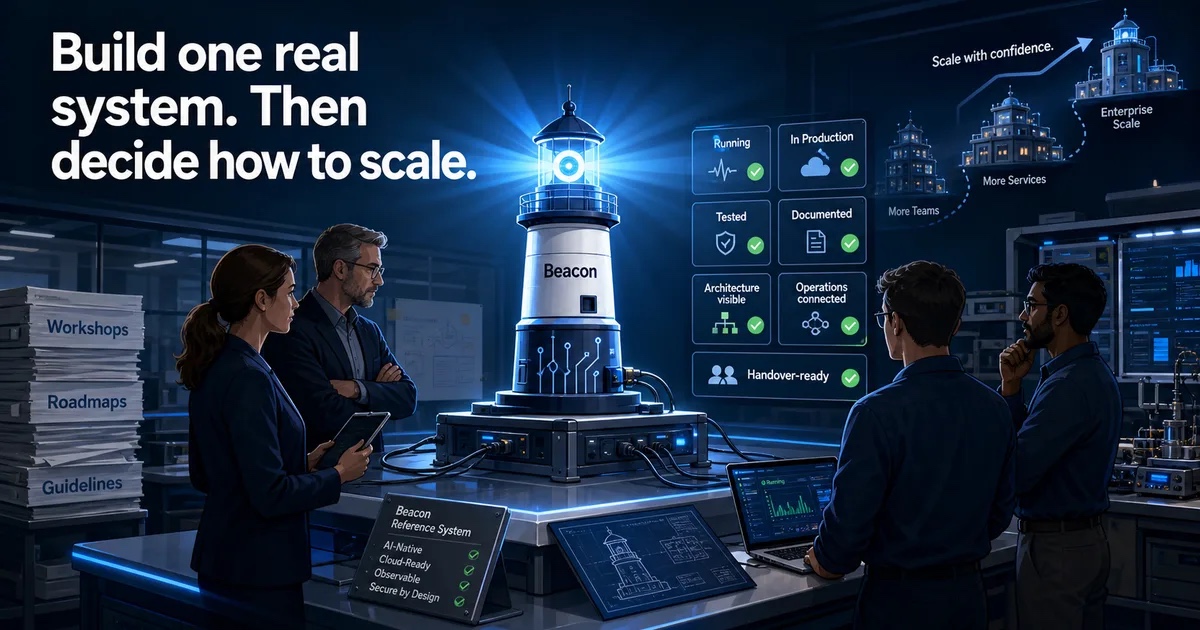
Whether the transition to AI-native Software Engineering is successful depends on how developers and management deal with the change and what conclusions they draw for roles, structures, and processes. A small, real-world AI beacon provides the necessary foundation.
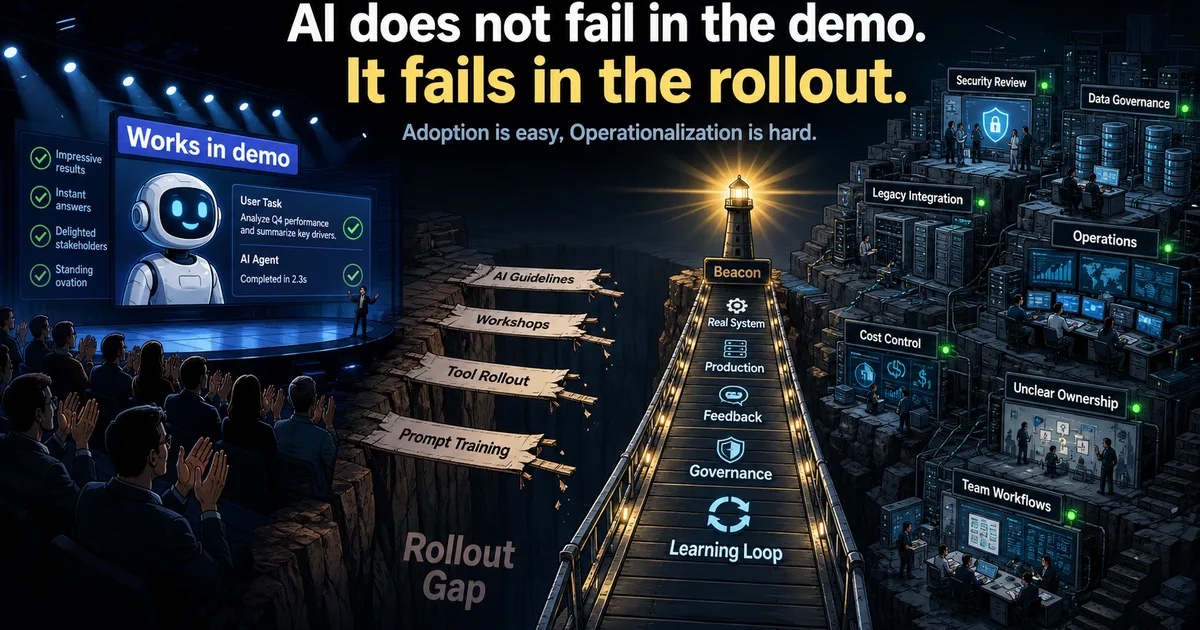
The problem is the entry point: instead of building, organizations explain; instead of anchoring responsibility, they prepare. AI introductions start where they cannot have any effect – on paper. AI only unfolds its impact where software is actually built.
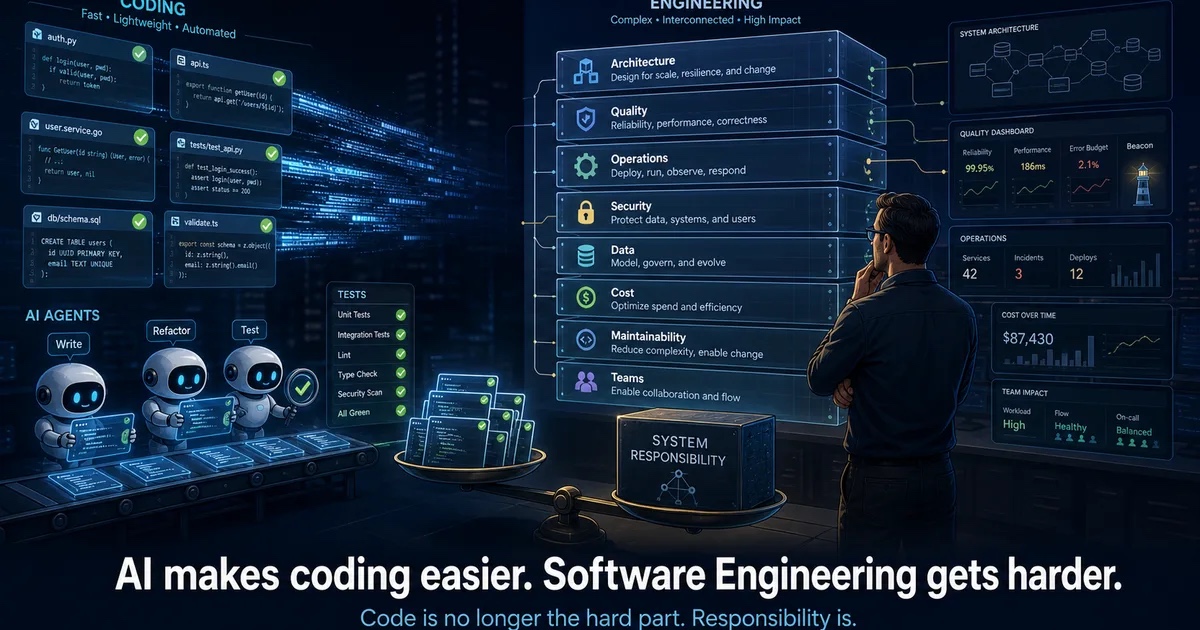
AI lowers the barrier to writing code – yet building production software reveals the opposite: software engineering gets harder. Leadership becomes the real work, every prompt iteration a decision. Being able to code well is no longer enough.
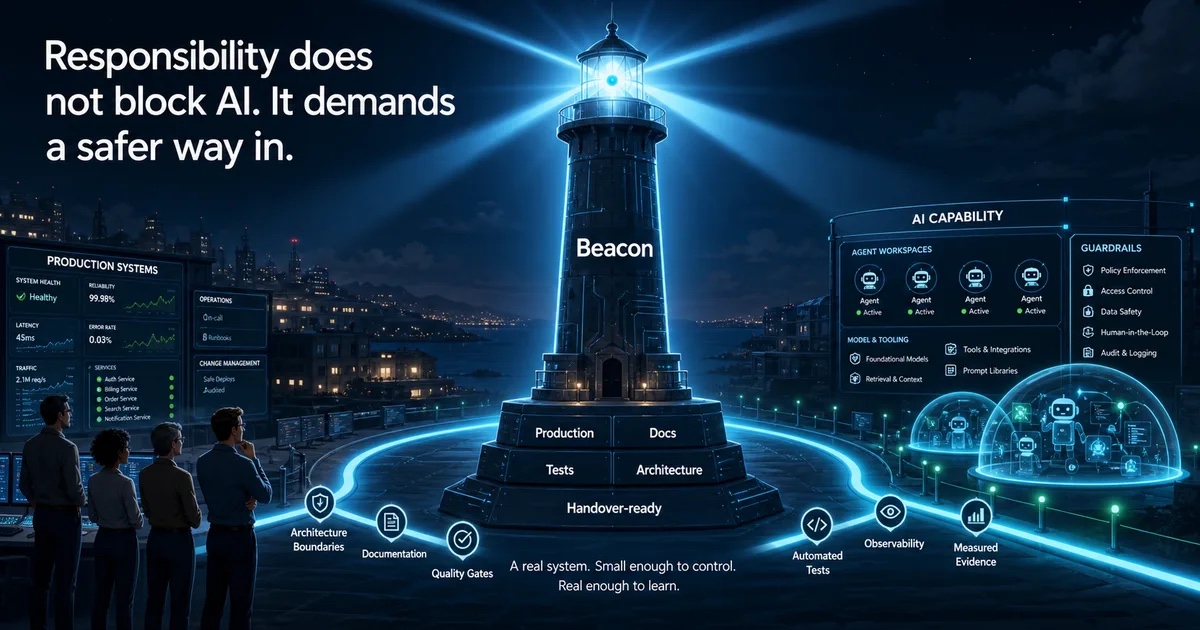
AI has arrived in software engineering. And yet, surprisingly little is happening in many organizations. Many leaders hesitate, not out of skepticism, but out of responsibility.
I don't trust any AI agent. And yet one just built an entire feature set, almost without my hands on the keyboard. Not because I trust it, but because every step leaves an audit trail.
For fifteen years I didn't build software myself. When I came back, a job that used to need a whole ops team was down to one click. Being 20X more productive isn't magic, it's a multiplication of three forces: Technology Leap, Learning Leap, Acceleration.
Hi, my name is Mischa. And I'm addicted to AI-native software engineering. How to live with that addiction, where it gets dangerous, and how responsibility takes the place of the rush.
Agile was my second professional love. Today I say goodbye. For over ten years I lived, taught, and scaled Agile. A year ago, when I typed my first prompt, it hit me pretty quickly why Agile no longer fits AI-native.
A decade after stepping back from the Lean Agile Scrum (LAS) community, I wanted to speak up again with a bold thesis: AI eats Agile for Breakfast. The conference was cancelled. Three weeks later I'm giving the opening keynote somewhere else – plus a workshop. Even the cancellation proved the thesis.
Whether the transition to AI-native Software Engineering is successful depends on how developers and management deal with the change and what conclusions they draw for roles, structures, and processes. A small, real-world AI beacon provides the necessary foundation.
The problem is the entry point: instead of building, organizations explain; instead of anchoring responsibility, they prepare. AI introductions start where they cannot have any effect – on paper. AI only unfolds its impact where software is actually built.
AI lowers the barrier to writing code – yet building production software reveals the opposite: software engineering gets harder. Leadership becomes the real work, every prompt iteration a decision. Being able to code well is no longer enough.
AI has arrived in software engineering. And yet, surprisingly little is happening in many organizations. Many leaders hesitate, not out of skepticism, but out of responsibility.