I am addicted
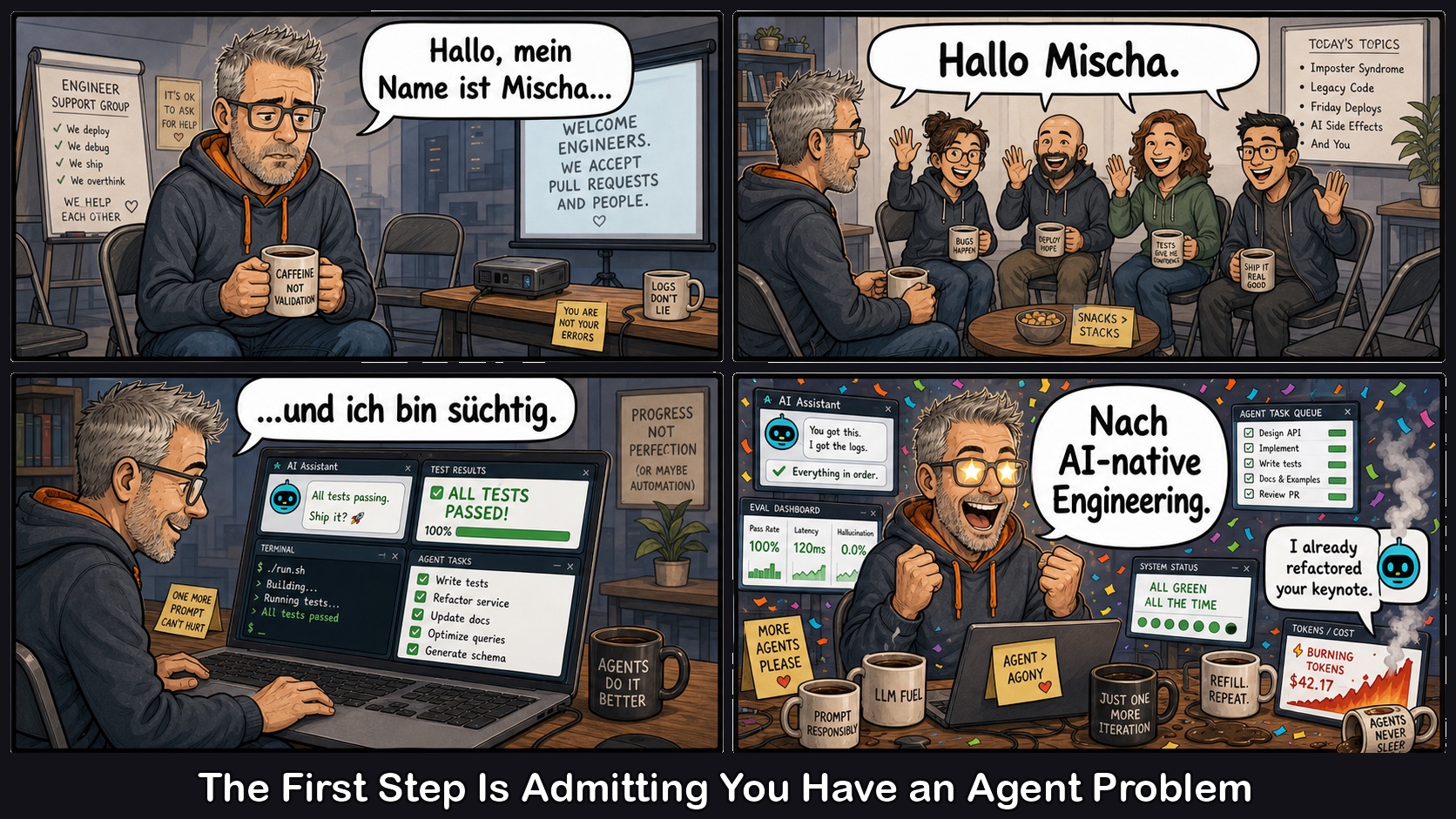
Hi, my name is Mischa. And I’m addicted.
Not to caffeine—though I drink plenty. I’m addicted to AI-native software engineering, that green test bar at three in the morning. To the pull request an agent builds faster than I can read.
And that feeling is exactly the most dangerous part.
The rush is real
It starts harmlessly. An agent solves a task that used to take half a day in ten minutes. Tests pass, green across the board. One pull request after another. You barely notice at first: the line between “I’m building something” and “I’m watching something get built” starts to blur. That’s exactly where the kick lives. Not in speed alone, but in the feeling that suddenly everything seems possible.
And yes, much of it is real. What comes together in an evening today would have taken a whole team three years ago. That’s not hype, it’s measured: the tasks an agent can reliably solve get more complex every few months, consistently, for years now. Once you’ve felt that, you don’t want to go back.
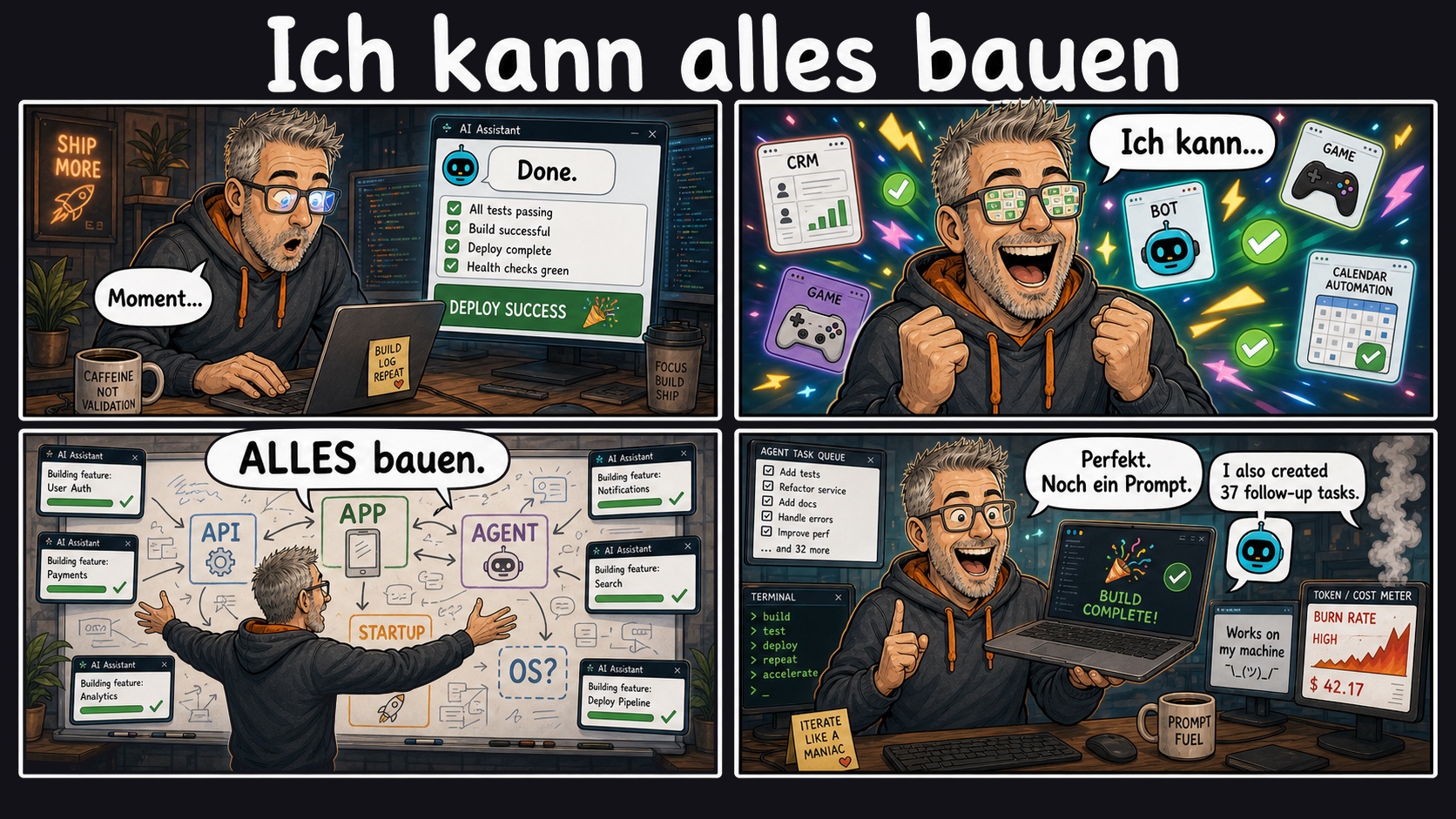
And then comes the moment you start building everything at once. API, app, agent, maybe a whole operating system while you’re at it – why not. The agent task queue fills itself: 37 follow-up tasks nobody asked for, yet somehow all sound plausible.
Where the fun stops
But the rush has a blind spot. “It runs” is not the same as “it’s well built.” An agent delivers code that holds up and code that collapses under the first real load with the exact same confidence – and you only notice the difference once it’s too late. The more capable an agent gets, the more important the question of who still knows where it should stop.
That’s the moment enthusiasm has to become responsibility. Not as a brake, but as structure: clear contracts between human and agent, verifiable results instead of blind trust, a system that makes quality repeatable instead of leaving it to chance. That’s exactly the core of beacon platform – not building less, but building more responsibly.
Not detox, but a frame
I’m not here to talk anyone out of AI-native software engineering. Quite the opposite. The addiction is what drives us to work at the edge of what’s possible in the first place. What’s missing isn’t less rush, it’s a frame that keeps it productive – Method, Platform and Context turning one brilliant prompt into a system an organization can actually rely on.
The first step is admitting you have a problem. The second is making sure it stays a productive one. The addiction is what drives me to push past the edge of what’s possible in the first place.
More on how we handle exactly this tension at beacon is coming in this series soon – AI-native software engineering, one post at a time, along the keynote AI ate Agile for Breakfast it all grew out of.